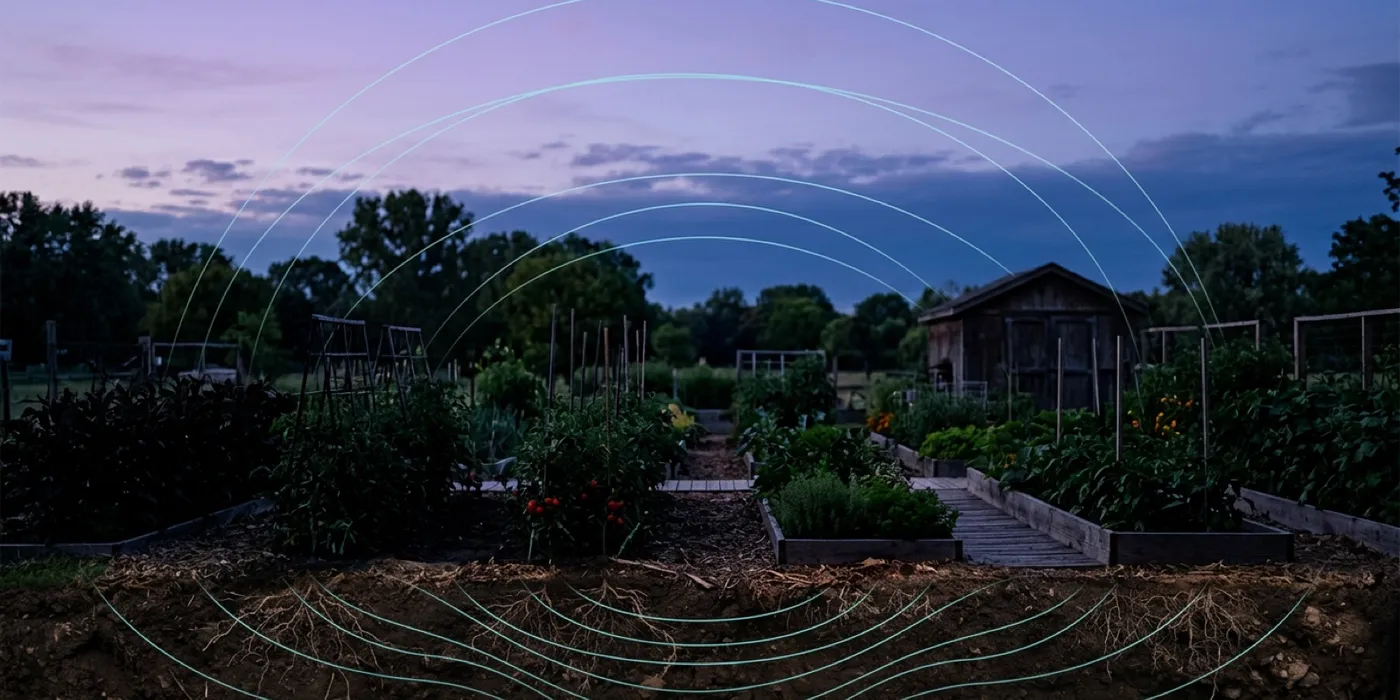
Every garden sits inside a faint, constantly shifting electric field — the atmosphere itself carries a small voltage gradient relative to the ground, and it changes with weather, time of day, and season. That much is uncontroversial atmospheric physics, well documented since the early 20th century.
What’s established, and what isn’t
What’s much less settled is how, or whether, that field — or deliberately applied electrical stimulation — measurably affects plant growth. Electroculture, the general practice of applying electrical or electromagnetic treatments to encourage growth, has a long history: recorded field experiments go back over a century, alongside plenty of folk practice with no formal trials behind it at all. Some mechanisms proposed — ion movement around plant tissue, effects on nutrient uptake — have partial modern research support. Others remain essentially anecdotal.
How we’re labeling this
We’re not going to tell you electroculture is settled science, and we’re not going to dismiss it as nonsense either. Where a specific claim has research behind it, we’ll say so. Where it’s a traditional practice without a modern mechanism, we’ll say that instead. The goal is to keep the two apart.